














While many people equate “core strength” with visible abdominal muscles, the reality of fitness after age 50 is far more functional. At this stage of life, a resilient midsection serves as the body’s primary stabilizer, facilitating every movement from walking to lifting groceries. A robust core is essential for maintaining proper posture, facilitating the efficient transfer of power between the upper and lower body, and alleviating unnecessary pressure on the joints.
Research underscores the importance of this central support system, noting that diminished core stability is often linked to poor balance and a higher risk of falls in older adults. To help you assess your current fitness level, James Brady, a certified personal trainer, highlights five essential movements. Mastering these exercises with control and precision is a strong indicator that your functional strength is on the right track for healthy aging.
The Forearm Plank for Isometric Endurance
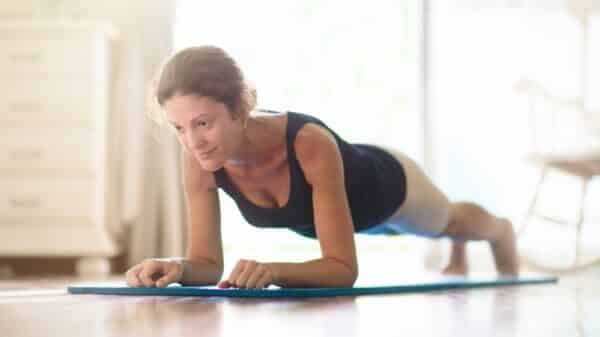
The plank is a foundational movement that requires the entire body to work in unison. By holding a rigid position, you develop coordinated tension across the abdominals, lower back, glutes, and shoulders. This exercise is widely considered one of the most effective ways to gauge core endurance and overall spinal stability for those over 50.
How to perform it:
- Lower yourself to the floor, supporting your weight on your forearms and toes.
- Ensure your elbows are aligned directly underneath your shoulders.
- Extend your legs fully, keeping your feet about hip-width apart.
- Maintain a straight line from your head to your heels, avoiding any arching or sagging in the lower back.
- Contract your core and glutes firmly to hold the position.
- Breathe deeply and steadily through your nose.
- Aim to hold the position for 20 to 60 seconds. Complete two to three rounds, resting for one minute between each.
Dead Bugs for Lumbar Stability and Coordination
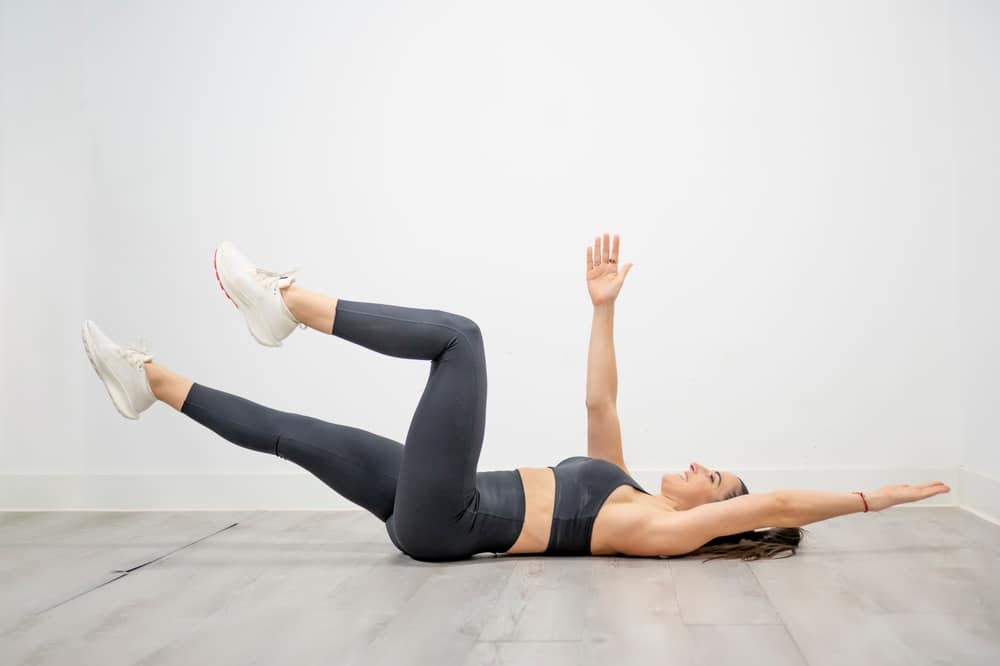
The dead bug is an excellent tool for training the core to remain stable while the limbs are in motion. This exercise is particularly beneficial because it emphasizes lower back protection, teaching you how to keep your spine neutral even when your center of gravity shifts.
How to perform it:
- Lie flat on your back with your arms reaching toward the ceiling.
- Lift your legs and bend your knees at a 90-degree angle, keeping your shins parallel to the floor.
- Gently press your lower back into the mat to engage your deep core.
- Slowly lower your right arm behind your head while simultaneously extending your left leg toward the floor.
- Stop the movement just before your back begins to lift off the ground.
- Return both limbs to the starting position with controlled movement.
- Switch sides and repeat.
- Perform two to three sets of 10 to 12 repetitions per side, resting for 45 to 60 seconds between sets.
The Bird Dog for Cross-Body Balance
According to Brady, the bird dog is a dual-purpose movement that strengthens the core while simultaneously refining posture and balance. It challenges the body to maintain a level pelvis and a stable torso during cross-body patterns, which are essential for everyday mobility.
How to perform it:
- Begin on all fours in a tabletop position, with hands under shoulders and knees under hips.
- Keep your neck in a neutral position and engage your abdominal muscles.
- Slowly reach your right arm forward while extending your left leg straight back.
- Focus on keeping your hips square to the ground, preventing any twisting in the torso.
- Hold the extension for one to two seconds to test your balance.
- Return to the starting position and switch to the opposite arm and leg.
- Complete two to three sets of 8 to 12 repetitions on each side, with a 45- to 60-second rest period.
Seated Russian Twists for Rotational Power
Rotational strength is often overlooked, yet it is vital for tasks like reaching into the backseat of a car or carrying items. Russian twists target the obliques and the muscles responsible for controlled twisting, which helps maintain agility as you age.
How to perform it:
- Sit on the floor with your knees bent and heels resting on the ground.
- Lean your torso back slightly, ensuring your spine stays straight and your chest remains lifted.
- Clasp your hands together in front of your chest.
- Using your core, rotate your torso to the right in a slow, deliberate motion.
- Bring your body back to the center before rotating to the left.
- Continue alternating sides while keeping your lower body as still as possible.
- Aim for two to three sets of 16 to 20 total repetitions, resting for 45 to 60 seconds between sets.
Glute Bridges for Posterior Chain Integration
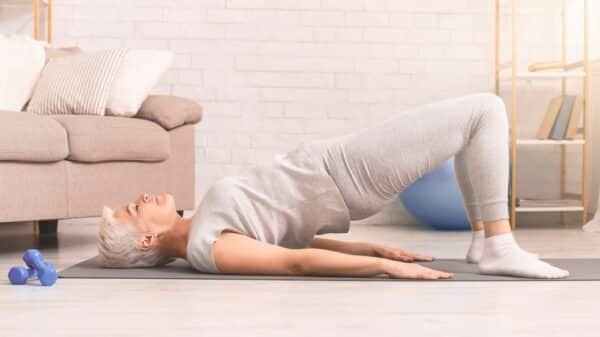
True core strength extends beyond the stomach muscles to include the glutes. As Brady notes, the glutes are fundamental for pelvic stability and provide critical support for the lower back. Strengthening the posterior chain ensures a more balanced and resilient midsection.
How to perform it:
- Lie on your back with your knees bent and feet flat on the floor, hip-width apart.
- Place your arms at your sides for stability.
- Tighten your core and drive through your heels to lift your hips toward the ceiling.
- Lift until your body creates a straight line from your knees to your shoulders.
- Squeeze your glutes at the top of the bridge for one to two seconds.
- Lower your hips back to the floor with control.
- Perform two to three sets of 12 to 15 repetitions, resting for 45 to 60 seconds between sets.
Maintaining a strong core after 50 is a cornerstone of longevity and independence. By incorporating these five foundational movements into your routine, you can improve your stability, protect your joints, and ensure your body remains capable of handling the physical demands of daily life. Consistency with these exercises will not only reveal your current strength levels but also provide a clear path toward improved balance and mobility for years to come.