


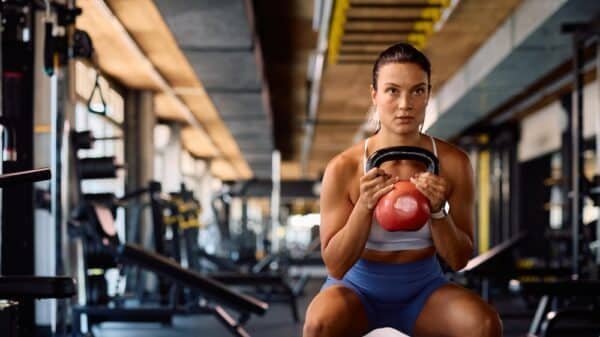













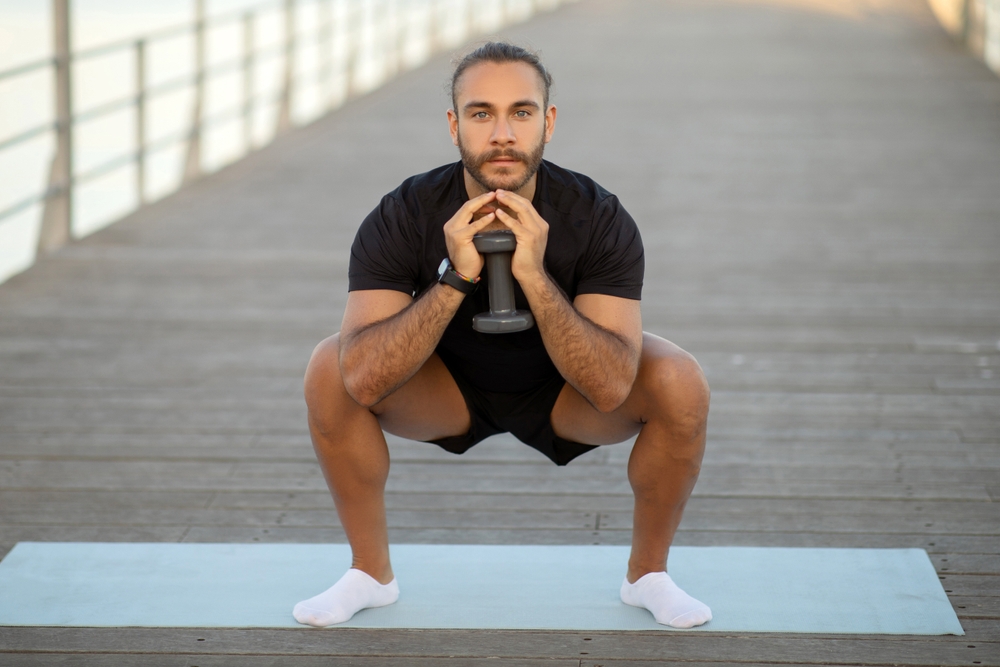
Can you maintain a squat hold for a full minute? For those over the age of 50, this 60-second mark has become a vital benchmark for functional health and longevity.
As we cross the 50-year milestone, the way we measure physical fitness shifts. While heavy lifting remains beneficial, other metrics—such as muscular endurance, joint stability, balance, and mobility—take center stage. These factors are the true pillars of maintaining independence and preventing injuries as the body ages.
Physical assessments like the squat hold are particularly effective because they are “compound” in nature. This stationary position challenges the quadriceps, glutes, and core while simultaneously testing the stability of the hips, knees, and ankles. Research featured in The Scandinavian Journal of Medicine & Science in Sports highlights that isometric exercises—movements where muscles remain under tension without lengthening or shortening—are highly effective at boosting endurance and stabilizing joints. For older adults, these physiological adaptations are critical for improving balance and lowering the statistical risk of falls.
According to James Brady, a certified personal trainer at OriGym, the ability to hold this position is a window into a person’s biological age. He notes that for those over 50, maintaining a controlled squat for 30 to 60 seconds indicates superior strength in the lower body and stabilizing muscles, alongside healthy mobility in the lower extremities.
To help you reach or exceed this 60-second benchmark, here are five essential exercises designed to improve your lower-body endurance and overall stability.
Developing Stamina with the Static Bodyweight Squat Hold
This movement serves as both a training tool and a diagnostic test. Successfully holding a deep squat for 30 to 60 seconds suggests your lower-body endurance may be ahead of 90 percent of your peers in the same age bracket. It requires total-body coordination and the ability to maintain tension under pressure.
How to perform it:
- Position your feet shoulder-width apart, turning your toes slightly outward to accommodate hip mobility.
- Engage your abdominal muscles and keep your chest lifted.
- Lower your hips toward the floor as if sitting in a chair.
- Aim to bring your thighs parallel to the ground, or as low as your current mobility allows.
- Distribute your weight evenly across your heels and the middle of your feet.
- Inhale and exhale steadily through your nose to maintain calm under tension.
- Ensure your knees stay tracked over your toes and do not cave inward.
- Hold for 30 to 60 seconds. Rest for 60 to 120 seconds and repeat for two to three sets.
Building Leg Strength via the Wall Sit
The wall sit is a foundational isometric exercise that isolates the quadriceps while providing spinal support. It is an excellent progression for those who are still developing the core strength needed for a free-standing squat hold.
How to perform it:
- Lean your back flat against a sturdy wall.
- Walk your feet forward about two feet away from the base of the wall.
- Slide your torso down until your knees form a 90-degree angle.
- Check that your knees are positioned directly above your ankles.
- Maintain firm pressure between your lower back and the wall.
- Keep your arms at your sides or crossed over your chest—do not rest them on your legs.
- Breathe deeply and hold for 30 to 60 seconds. Aim for three sets with adequate rest in between.
Refining Technique with the Supported Squat Hold
If balance is a current limitation, the supported squat hold allows you to build the necessary muscular endurance without the fear of falling. By using an external anchor, you can focus entirely on your depth and postural alignment.
How to perform it:
- Stand in front of a stable surface, such as a heavy table, countertop, or a door frame.
- Grip the support lightly with both hands.
- Lower into a squat, keeping your torso upright and your weight in your heels.
- Use the support only for balance; try not to “pull” yourself up or lean too heavily on it.
- Maintain a steady breathing pattern and monitor your knee alignment.
- Hold the position for 20 to 45 seconds. Repeat for two to three rounds.
Improving Coordination with Dynamic Step-Back Squats
Unlike static holds, step-back squats introduce movement, forcing the body to find stability dynamically. This exercise is particularly helpful for functional “real-world” strength, where balance is often challenged while moving.
How to perform it:
- Begin in a standing position with feet hip-width apart.
- Step one foot back slightly while maintaining an upright posture.
- Lower into a partial squat, ensuring the front knee stays aligned with the ankle.
- Drive through the front foot to return to the starting position.
- Repeat the movement on the opposite side.
- Perform 10 to 12 controlled repetitions per leg for two to three sets.
Testing Functional Power with the Single-Leg Sit-to-Stand
Unilateral (one-sided) exercises are vital for identifying and correcting muscle imbalances. The single-leg sit-to-stand is a high-level indicator of functional independence, as it mimics the strength required to get out of a chair or car using a single limb for support.
How to perform it:
- Sit on the edge of a firm chair with one foot planted firmly on the floor.
- Extend the other leg out in front of you, keeping the heel off the ground if possible.
- Lean slightly forward to shift your center of mass over your supporting foot.
- Press through the planted foot to stand up fully.
- Slowly and with control, lower yourself back into the seat.
- Complete 6 to 10 repetitions on each leg. Aim for two to three sets per side.
Final Thoughts on Longevity and Strength
Achieving a 60-second squat hold is more than just a fitness milestone; it is a testament to the resilience of your joints and the endurance of your muscles. By integrating these static holds and functional movements into your weekly routine, you can improve your mobility, reduce the risk of age-related falls, and ensure your body remains capable and strong well beyond the age of 50. Consistency is key—start with shorter holds and gradually work your way up to the one-minute mark.