














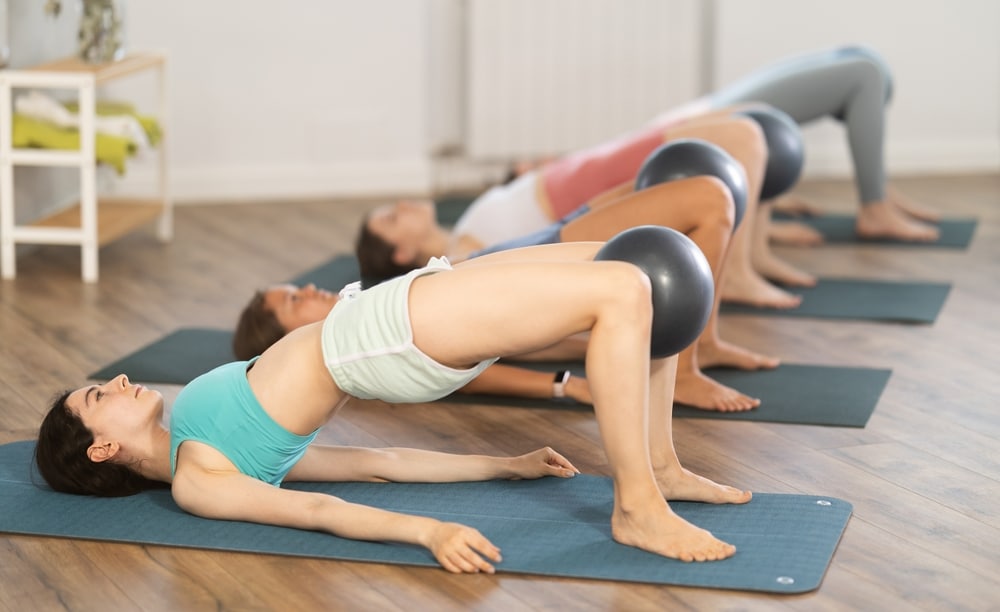
The bridge is a deceptive exercise; it appears effortless until you attempt to hold the position with true precision. Once you elevate your hips and lock into place, your body immediately provides a diagnostic report. To maintain the posture, your glutes must remain fully engaged, your pelvis must stay balanced, and your core must coordinate the entire effort. For individuals over 60, this synergy between the hips and the midsection is a fundamental component of maintaining functional mobility and performing daily tasks with ease.
Strong glutes are far more than just “hip muscles”—they are a critical part of your core architecture. They are responsible for stabilizing the pelvis, offering essential support to the lumbar spine, and creating a sturdy foundation for the entire torso. When hip strength is optimized, routine movements like walking, navigating staircases, rising from a chair, or carrying groceries feel significantly more stable. Furthermore, robust glutes improve physical resilience by ensuring the body distributes impact and force through the hips rather than allowing it to place undue stress on the lower back or knee joints.
In a professional training environment, hip bridges are a staple, particularly as isometric holds during a warm-up sequence. They are highly accessible and remarkably effective at “awakening” the glutes before transitioning to more complex movements. These holds also serve as an excellent assessment tool to gauge an individual’s ability to maintain muscular tension. If a person can keep their hips level and their glutes active, it is a strong indicator that their body is prepared for controlled, high-quality movement.
While raw strength is important, muscular endurance is equally vital for longevity. Life requires our muscles to sustain effort over long durations, whether you are walking through a park, standing while cooking, or spending a full day on your feet. Periodically testing your endurance provides a snapshot of how well your body handles prolonged tension. The bridge hold is one of the most effective ways to measure this capability. Below, we explore why this movement is so impactful, the proper technique for execution, what your specific hold time indicates about your current fitness, and how to enhance your hip and core stability.
How the Bridge Exercise Enhances Posterior Chain Stability in Older Adults
The bridge hold specifically targets the “posterior chain”—the muscles along the back of the body that are frequently overlooked in traditional core workouts. Your glutes, hamstrings, and lower back muscles must work in unison to keep the spine and pelvis in an optimal position. When these muscle groups are synchronized, they create a protective foundation that supports almost every physical activity you undertake.
The glutes are the primary drivers in this movement. Their job is to extend the hips and prevent the pelvis from tilting or dropping. This is crucial because pelvic stability directly influences the health of your lower back and the fluidity of your gait. A consistent bridge practice reinforces this neurological connection and builds strength without placing excessive pressure on the joints.
Sustaining a bridge hold also develops the endurance of the postural muscles. As the seconds tick by, your hips must resist gravity, your ribcage must stay integrated, and your core must stabilize the torso while you maintain a steady breathing pattern. This trains your body to rely on sustained muscular engagement rather than short, unsustainable bursts of power. This is why the bridge is such an insightful metric for core health after age 60.
Mastering the Bridge Hold: A Step-by-Step Technical Guide
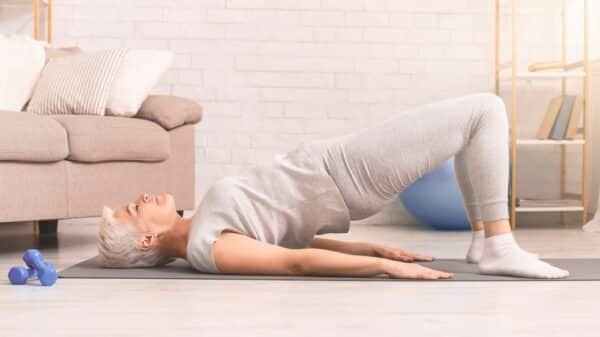
A high-quality bridge hold depends entirely on your starting alignment. The goal is to drive the movement through the hips, ensuring the glutes are the primary workers. You are looking to create a straight, unwavering line from your shoulders to your knees, keeping the lower back neutral and the hips perfectly level. Once the form is established, the challenge is simply a matter of maintaining that “clean” tension.
Execution Steps:
- Lie flat on your back, bending your knees and placing your feet flat on the floor, roughly hip-width apart.
- Rest your arms at your sides with your palms pressed firmly into the ground for added stability.
- Engage your core by bracing your midsection before you begin the ascent.
- Push through your heels to lift your hips until your knees, hips, and shoulders form a diagonal line.
- Contract your glutes intensely, ensuring your ribs remain tucked and your pelvis does not sag.
- Hold this static position, breathing deeply and rhythmically while keeping your hip height consistent.
The standard for a successful hold is strict: your hips must not dip, and you should not feel the effort shifting exclusively into your lower back. If your form begins to crumble or your hips start to rotate, end the set, rest, and focus on a shorter duration with better integrity in your next attempt.
Advanced Progressions: For those seeking a greater challenge, consider variations such as the single-leg bridge, marching bridges, or placing your feet on an elevated surface.
Interpreting Your Results: What Your Hold Time Reveals About Hip Health
Your total hold time provides a clear window into the endurance of your posterior chain. It is important that the quality of the hold at the final second is identical to the quality at the first second. Use the following benchmarks to assess your current level of hip and core function:
- Under 30 Seconds: Foundational Level. You are currently establishing the necessary mind-muscle connection. Focus on activating the glutes and maintaining a level pelvis through shorter, high-quality sets.
- 30 to 60 Seconds: Functional Base. This indicates a healthy level of stability. Your core and glutes are capable of supporting your frame during routine daily activities and moderate exercise.
- 60 to 90 Seconds: Advanced Stability. You possess strong hip and core control. Your muscles can withstand significant fatigue while maintaining proper postural alignment.
- Over 90 Seconds: Elite Endurance. This is the gold standard for individuals over 60. Reaching this milestone suggests that your hips and core are exceptionally well-coordinated, providing a powerful foundation for an active, independent lifestyle.
Practical Strategies to Improve Your Gluteal Strength and Core Stamina
Improving your bridge hold is less about “gritting your teeth” and more about refining the quality of your muscular contractions. The objective is to cultivate a core that stays “organized” even as fatigue sets in. This type of endurance translates directly to real-world movements, teaching the hips to share the workload with the knees and back. A few dedicated sessions per week can lead to rapid improvements in both your hold time and your general movement confidence.
- Prioritize Consistency: Perform two to three sets of controlled bridge holds several times a week. Focus on perfect form rather than trying to break a time record every session.
- Pre-Lift Activation: Before you lift your hips, consciously brace your abdominal wall and plant your feet firmly. Setting the tension early prevents compensation.
- Heel-Drive Focus: By emphasizing the pressure through your heels, you more effectively recruit the hamstrings and glutes, which protects the lower back from overworking.
- Control the Ribcage: Keep your ribs pulled down toward your belt line. This prevents your back from arching excessively and keeps the work focused on the hips.
- Incremental Progressions: If a long hold feels overwhelming, perform multiple “mini-holds” of 20 seconds with maximum tension to build a solid base.
- Introduce Asymmetry: Incorporating single-leg variations can help identify and correct strength imbalances between your left and right sides.
- Supportive Strength Training: Movements like split squats, step-ups, and dead bugs complement the bridge by strengthening the surrounding musculature and improving overall trunk control.
- Periodic Assessment: Retest your maximum hold time every few weeks to document your progress and stay motivated.
Scientific Resources and Literature
- Inacio, M. et al. (2014). An analysis of how gluteal muscle health differentiates fall risk in older populations. BMC Geriatrics.
- Oranchuk, D. J. et al. (2019). A systematic review of the long-term physiological adaptations resulting from isometric training. Scandinavian Journal of Medicine & Science in Sports.
Final Thoughts on Hip Health and Longevity
The bridge hold is far more than a simple floor exercise; it is a vital indicator of how well your body maintains its structural integrity as you age. For those over 60, achieving a hold time of 90 seconds or more signifies a level of core and hip endurance that supports long-term mobility and reduces the risk of injury. By consistently training this movement and focusing on the quality of your muscular engagement, you are building a more resilient foundation for all the activities that keep you active and independent.