




















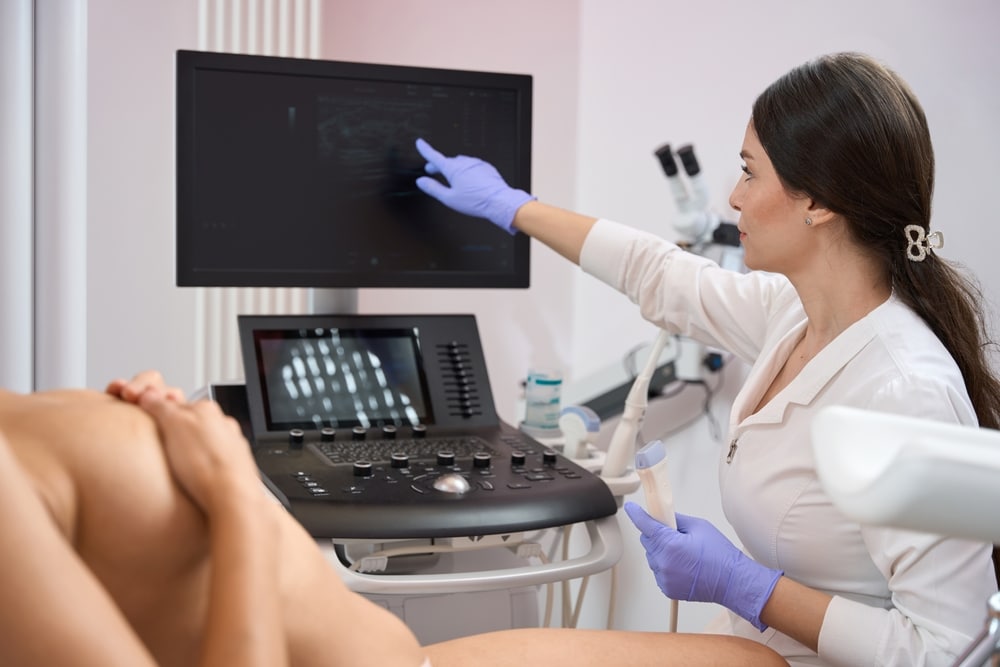
Receiving a mammogram report with no findings is often a moment of relief, yet for many women, that relief is shadowed by uncertainty. If you have been informed that you have dense breast tissue, an “all-clear” letter may not provide the full picture. For a significant portion of the population, incorporating a supplemental ultrasound into their screening routine is the missing piece of the puzzle that provides genuine peace of mind.
Why Mammography Alone May Be Insufficient for Dense Breasts
The primary challenge with traditional mammography is a phenomenon known as masking. On a standard X-ray, both dense breast tissue and potential tumors appear white. This creates a visibility issue that is not a result of poor technology or radiologist error; rather, it is a matter of physics. When dense tissue and masses share the same visual density, distinguishing between the two becomes exceptionally difficult.
Breast density is incredibly common, affecting nearly 50% of women. It is important to note that density is not something that can be detected through a physical touch or a self-exam. Instead, it is a clinical finding determined by a radiologist using the BI-RADS assessment, which categorizes density from A (mostly fatty) to D (extremely dense). Knowing where you fall on this scale is essential, as women with dense tissue face a risk of developing breast cancer that is four to six times higher than those with fatty tissue.
Dense breasts are composed primarily of fibrous and glandular tissue rather than fat. While the tissue itself is not cancerous, its ability to hide small masses makes supplemental tools like 3D ultrasound vital. These technologies improve visibility, turning the goal of early detection into a consistent reality rather than a matter of chance.
The Role of Supplemental Ultrasound in Identifying Hidden Tumors
Unlike mammograms which use X-rays, ultrasound technology utilizes high-frequency sound waves. This fundamental difference allows the imaging to penetrate dense tissue in a way that X-rays cannot. While a mammogram might show a solid white area, an ultrasound can look through that area to determine if a spot is a simple fluid-filled cyst or a solid mass that requires further investigation.
Clinical data highlights the effectiveness of this dual approach. Research indicates that adding a supplemental ultrasound can identify an additional three to four cancers for every 1,000 women screened compared to mammography alone. For women who have relied solely on annual mammograms, this is a significant increase in detection capability.
Furthermore, ultrasound offers several practical benefits. The exam is performed in real-time, allowing the technician to adjust angles and focus on specific areas of concern immediately. Because it does not use ionizing radiation, it is a safe option for supplemental imaging throughout a woman’s lifetime of screenings.
Identifying High-Priority Candidates for Supplemental Breast Screening
While every woman should discuss her specific risk factors with a healthcare provider, certain groups benefit most from adding an ultrasound to their regimen:
- Women who have been clinically notified of having “dense” or “extremely dense” breast tissue.
- Individuals with a family or personal history of breast cancer, even in the absence of known genetic markers like BRCA.
- Younger women (often in their 30s) who wish to establish a proactive baseline before reaching the standard age for annual mammograms.
- Patients with a history of breast surgeries or biopsies, as scar tissue can create additional “noise” on a traditional mammogram.
Beyond physical risk factors, supplemental imaging serves as a tool for clarity. For women who frequently deal with “callback” letters or diagnostic ambiguity, an ultrasound can provide the definitive answers needed to reduce anxiety and avoid the psychological toll of uncertainty.
How to Integrate Ultrasound into Your Annual Health Strategy
It is important to view ultrasound as a companion to mammography, not a replacement. To streamline the process, many women choose to schedule both appointments during the same visit. This “one-stop” approach ensures a comprehensive evaluation without the need for multiple trips to the imaging center.
You do not necessarily need to wait for a specialist to suggest this; your primary care physician or OB-GYN can order a dense breast ultrasound. During your next check-up, ask specifically about your density category. Being armed with this specific information allows you to advocate for the most thorough screening possible. Some modern facilities even offer bundled 3D mammography and automated breast ultrasound (ABUS) packages specifically designed for dense tissue patients.
Navigating Insurance and Costs for Supplemental Breast Imaging
Financial coverage for supplemental screening varies depending on your location and provider. Some regions have passed legislation requiring insurance companies and Medicare to cover breast ultrasounds for women with dense tissue. In other cases, the exam may be classified as “diagnostic” rather than “preventative,” which can affect out-of-pocket costs.
Before your appointment, contact your insurance provider to clarify how they classify supplemental ultrasound for dense breasts. If coverage is limited, many imaging centers offer competitive self-pay rates for patients paying cash. As advocacy for breast health grows, legislation continues to trend toward broader coverage, making these life-saving tools more accessible to everyone.
Conclusion: Taking Charge of Your Breast Health Through Informed Screening
A “normal” mammogram should provide confidence, not questions. For women with dense breast tissue, that confidence is often found by looking beyond the standard X-ray. By understanding your density category and pairing your annual mammogram with a supplemental ultrasound, you provide your medical team with the clearest possible view of your health. Proactive screening is about ensuring no detail is left to chance, allowing for earlier detection and more effective care. Start the conversation with your doctor today to ensure your screening plan is as thorough as it needs to be.