
















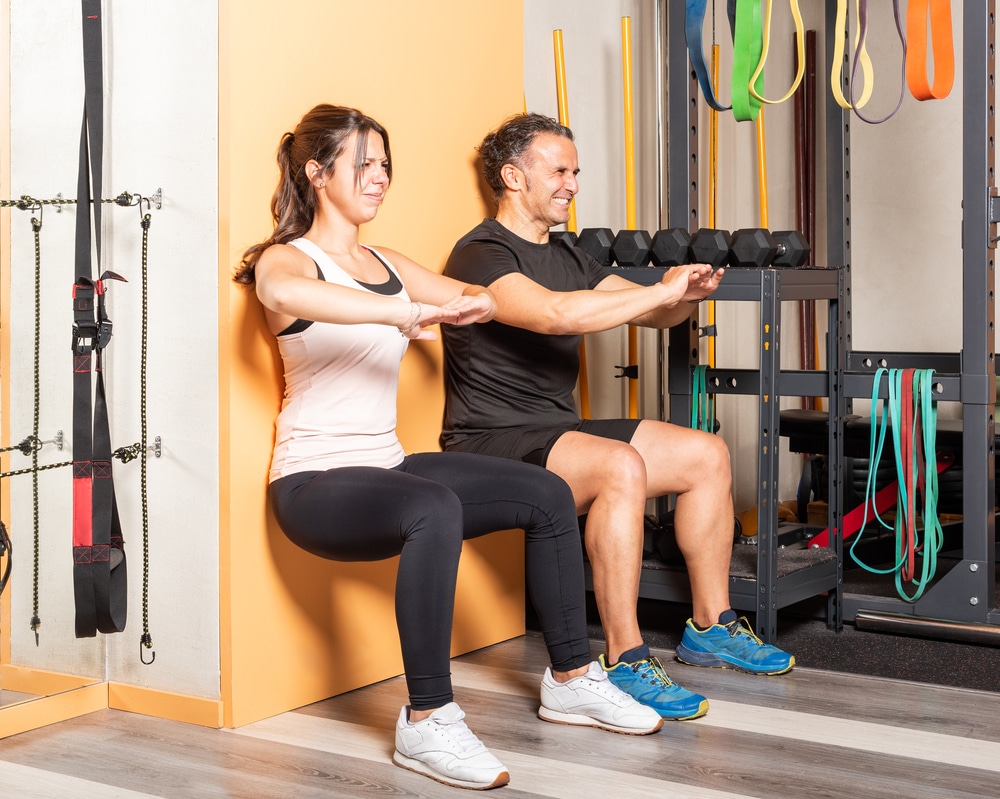
While they may appear static, wall sits are a deceptively intense and revealing diagnostic tool for assessing lower-body health in adults over 60. This exercise utilizes isometric tension, a training method where muscles remain under constant strain without changing length. By consistently performing wall sits, you can significantly enhance the strength and endurance of your quadriceps, glutes, and hamstrings. These muscle groups are the foundation for essential daily movements, including walking, navigating stairs, and maintaining an upright posture for long periods. Developing this lower-body foundation is also linked to improved balance, increased walking speed, and greater overall mobility as we age.
For those in the 60-plus demographic, fitness experts often use the wall sit to gauge functional capacity. Achieving a hold of 30 to 45 seconds with proper technique is considered a solid indicator of functional strength. If you can maintain the position for more than 60 seconds, your lower-body endurance is considered “elite” for your age group. Monitoring your progress in this exercise provides a clear window into your physical resilience and ability to handle the demands of an active lifestyle.
Mastering the Wall Sit Technique
The wall sit is the definitive test of stamina for your lower body, specifically challenging your ability to hold tension across multiple muscle groups simultaneously.
How to perform it correctly:
- Position yourself with your back pressed firmly against a flat wall.
- Move your feet forward about 18 to 24 inches away from the base of the wall.
- Slowly slide your back down the wall until your thighs are nearly parallel to the floor, aiming for a 90-degree bend at the knees.
- Ensure your knees are positioned directly above your ankles, not extending past your toes.
- Maintain a gentle pressure with your lower back against the wall to support your spine.
- Tighten your abdominal muscles and keep your torso upright.
- Let your arms hang naturally at your sides or cross them over your chest.
- Focus on steady, controlled nasal breathing throughout the hold.
- Start by aiming for a 30-second hold and gradually increase your duration toward the 60-second mark as your strength improves.
Building Foundation with Bodyweight Squats
To improve your wall sit duration, dynamic movements like bodyweight squats are essential. These squats target the same muscle groups as the wall sit but add a range of motion that helps build the raw power necessary for longer isometric holds.
How to perform them:
- Stand with your feet spaced shoulder-width apart.
- Keep your chest lifted and your core muscles engaged.
- Initiate the movement by hinging at the hips and lowering your seat as if sitting in a chair.
- Bend your knees while ensuring your weight stays centered through your heels.
- Lower yourself until your thighs are parallel to the ground, or as far as your current range of motion allows.
- Hold the bottom position for one to two seconds to eliminate momentum.
- Drive through your heels to return to the starting standing position.
- Complete two to three sets of 10 to 15 repetitions, allowing 45 to 60 seconds of rest between sets.
Improving Functional Power with Sit-to-Stands
The sit-to-stand exercise is a practical movement that translates directly to everyday independence. It builds the endurance and mobility required for both wall sits and general lower-body stability.
How to perform them:
- Sit on the front edge of a stable, sturdy chair or bench.
- Keep your feet flat on the floor, aligned with your hips.
- Maintain an upright posture and engage your core.
- Lean slightly forward from the hips to shift your center of gravity.
- Push through your heels to stand up completely.
- Ensure your hips are fully extended at the top of the movement.
- Slowly and with control, lower yourself back to the chair, avoiding the urge to simply “drop” down.
- Perform two to three sets of 10 to 12 repetitions, resting for 45 to 60 seconds between sets.
Developing Unilateral Stability via Step-Ups
Step-ups are excellent for building unilateral strength, which means strengthening each leg independently. This is vital for correcting muscle imbalances and improving the coordination needed for walking and climbing stairs safely.
How to perform them:
- Stand facing a stable step or a dedicated fitness platform.
- Place your entire foot firmly onto the step.
- Engage your core and maintain an upright, tall posture.
- Drive through the foot on the step to lift your entire body upward.
- Bring your trailing foot up to meet the lead foot on the platform.
- Step back down to the floor with deliberate control.
- Complete a full set on one leg before switching to the other.
- Aim for two to three sets of 10 to 12 repetitions per leg, with 45 to 60 seconds of rest between sets.
Final Thoughts on Lower-Body Longevity
Building lower-body strength after 60 is one of the most effective ways to preserve your independence and physical health. By utilizing the wall sit as a benchmark and supplementing it with dynamic exercises like squats, sit-to-stands, and step-ups, you create a comprehensive routine that addresses strength, endurance, and balance. Consistency is key; as you progress from a 30-second hold to a full minute, you aren’t just hitting a fitness number—you are reinforcing the functional foundation that supports your quality of life.