


















Assessing physical fitness involves much more than tracking a single data point. True physical readiness is reflected in how you move, your ability to recover from exertion, and how your body manages the physical demands of daily life. You recognize it when you can finish a challenging workout with energy to spare, your joints remain mobile, and fundamental movements feel effortless.
While fitness is multi-faceted, certain benchmarks provide a clearer picture of your health than others. Strength, endurance, and motor control are the primary indicators of a well-functioning body. Among various tests, movements that utilize your own body weight offer the most accurate insight into your functional capacity.
The push-up stands out as a premier metric for relative strength. Because this exercise requires you to manage your own body mass rather than an external weight, it directly links your physical power to your size and coordination. Successfully performing multiple repetitions of a push-up suggests a high level of overall physical conditioning and body awareness.
The Role of Push-Ups as a Holistic Health Indicator
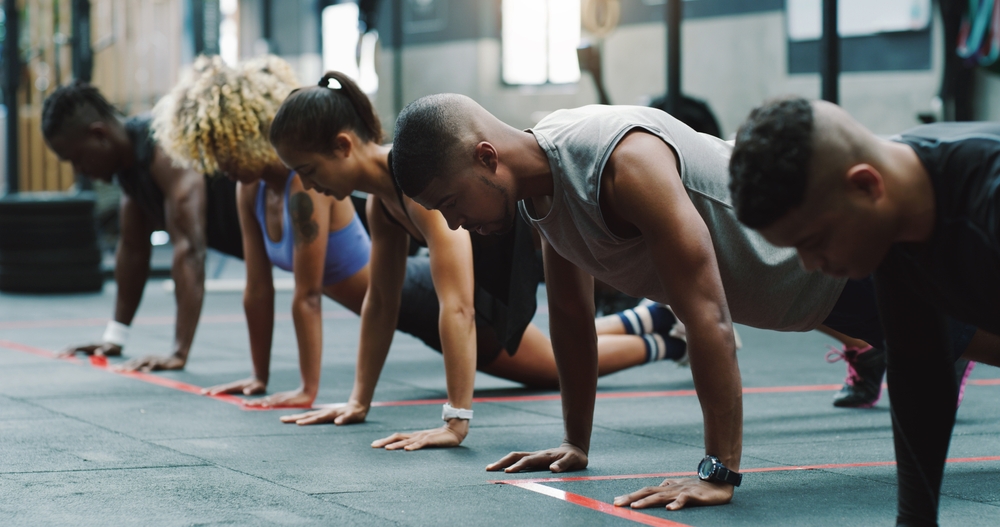
Push-ups provide a comprehensive snapshot of your physical health in a short amount of time. While the primary drivers are the chest, anterior deltoids, and triceps, the exercise is actually a full-body movement. To maintain a rigid position, your core must remain fully engaged, ensuring your body operates as a single, synchronized unit. If there is a weakness in the kinetic chain, it becomes immediately apparent during the movement.
Beyond raw power, push-ups are an excellent test of muscular endurance. While a single repetition demonstrates strength, the ability to perform a high volume of reps shows how long your muscles can sustain a high level of output. Maintaining a steady breathing rhythm and consistent form as fatigue sets in is a hallmark of being in superior physical shape.
Furthermore, push-ups emphasize the importance of relative strength—the ability to control your own body through space. This is particularly vital as we age. Maintaining the strength to move your own weight translates directly to daily independence, whether it involves pushing open a heavy door, catching yourself during a stumble, or performing household tasks with confidence.
How to Execute a Perfect Push-Up With Precision
The effectiveness of a push-up is entirely dependent on your setup. Consistent positioning ensures that every repetition accurately reflects your actual strength levels and protects your joints.
Execution Steps:
- Position your hands on the floor slightly wider than your shoulders.
- Extend your legs fully behind you so your body creates a straight line from head to heels.
- Engage your abdominal muscles and squeeze your glutes to stabilize your spine.
- Lower your chest toward the ground in a controlled manner.
- Forcefully press through your palms to return to the starting position.
- Maintain a rhythmic, steady pace throughout the set.
To meet the standard for a quality repetition, you should lower yourself until your elbows reach at least a 90-degree angle while keeping your hips from sagging. If standard push-ups are too challenging to perform with perfect form, utilizing an incline—such as placing your hands on a bench or countertop—is an excellent way to build strength while maintaining integrity.
Effective variations to consider include incline push-ups, tempo-focused reps, decline positions for increased difficulty, and close-grip variations to target the triceps.
Understanding Your Push-Up Score: Performance Metrics for Seniors
When evaluating your numbers, quality is more important than quantity. Each repetition should feature a full range of motion, total body control, and a steady cadence. For adults over the age of 55, the following benchmarks can help categorize your current fitness level:
- Fewer than 8 repetitions: You are currently in the foundational phase. Focus on perfecting your technique and using modifications to build the necessary strength to move into higher rep ranges.
- 8 to 15 repetitions: This represents a solid level of fitness. Your upper body possesses enough strength to manage your weight through repeated efforts with good control.
- 15 to 25 repetitions: This range indicates you are in very good physical condition. It demonstrates a healthy balance of muscular power and cardiovascular endurance.
- More than 25 repetitions: This is considered an excellent level of performance. Achieving this number shows superior upper body stamina, a strong core, and highly efficient movement patterns.
Proven Methods to Increase Your Push-Up Capacity and Functional Strength
Improving your push-up performance is a matter of developing repeatable control. Progress is rarely made through one-off “max effort” attempts; instead, it is built by consistently stacking high-quality repetitions over time. As your nervous system becomes more efficient at keeping your body tight and moving smoothly, your rep counts will naturally rise.
Push-up capacity often improves rapidly when you address all components of the movement. While chest and shoulder strength are vital, the stability provided by your core is often the limiting factor. When your trunk provides a stable base, your limbs can produce force more efficiently.
- Prioritize regular practice: Performing several sets a few times a week is more effective for building strength than one long session.
- Maintain full-body tension: Treat the push-up as a moving plank. Keeping the glutes and core tight prevents energy leaks.
- Work through a complete range: Training down to a 90-degree elbow bend ensures you build strength at the most difficult part of the movement.
- Incorporate modifications: Do not hesitate to use incline push-ups to ensure you are hitting high-quality reps rather than struggling with poor form on the floor.
- Include accessory exercises: Movements like rows, overhead presses, and loaded carries help balance out the muscles used in pushing.
- Focus on tempo: Slowing down the eccentric (lowering) phase of the movement builds massive amounts of control and structural strength.
- Be patient and consistent: Lasting physical changes occur through repeated exposure and incremental progress.
Summary: What Your Push-Up Count Says About Your Health
Being able to perform between 15 and 25 high-quality push-ups after age 55 is a strong indicator of physical resilience. This level of relative strength is a vital asset for maintaining long-term mobility and independence. By focusing on consistent form and gradual progression, you can use the push-up not just as a test, but as a primary tool for maintaining a healthy, capable body well into your later years. Ultimately, the ability to control your own body weight is one of the most practical measurements of functional longevity available.