


















This wall sit test shows if your legs outlast people half your age.
Most people picture leg strength as something more gritty: heavy squats, hard workouts, or big gym numbers. A wall sit is a more functional measure that shows a clearer picture of strength as we age. After 50, staying in the positions a wall sit requires with control says a lot about how strong your legs really are.
The comparison to most 30-year-olds works because youth doesn’t automatically mean better leg endurance. Plenty of younger adults can move fast through a workout, then struggle when they have to hold a position for time. A sturdy wall sit rewards control, patience, and the ability to keep your legs working once the burn starts.
That makes this test a simple confidence builder. Start at a height that feels right, track your time, and build from there. Below, we’ll cover why wall sits are such a strong lower-body test, how to set one up correctly, what hold time puts you ahead of the pack, and how to improve without beating up your joints.
Why Wall Sits Are a Strong Test After 50
Wall sits are useful because they test isometric strength, which is your ability to create force without moving through reps. Once you slide into position, your quads have to keep your knees from changing angle, and your glutes help keep your hips steady. That constant tension is why the exercise feels manageable at first, then gets a little more serious.
The hold also gives you a clear look at lower-body strength endurance in a fixed position. Your quads stay under continuous tension, your hips must stay steady, and your breathing needs to stay controlled as the hold gets harder. That makes the wall sit useful because the test doesn’t depend on speed, rhythm, or how quickly you move through reps. It simply asks how long your legs can maintain a strong position before fatigue changes your form.
After 50, that balance makes the wall sit valuable. It challenges your legs, gives you a clear score, and lets you adjust the difficulty without needing equipment. A long, clean hold shows your lower body can tolerate tension, hold position, and stay steady as the effort climbs.
How to Do an Excellent Wall Sit
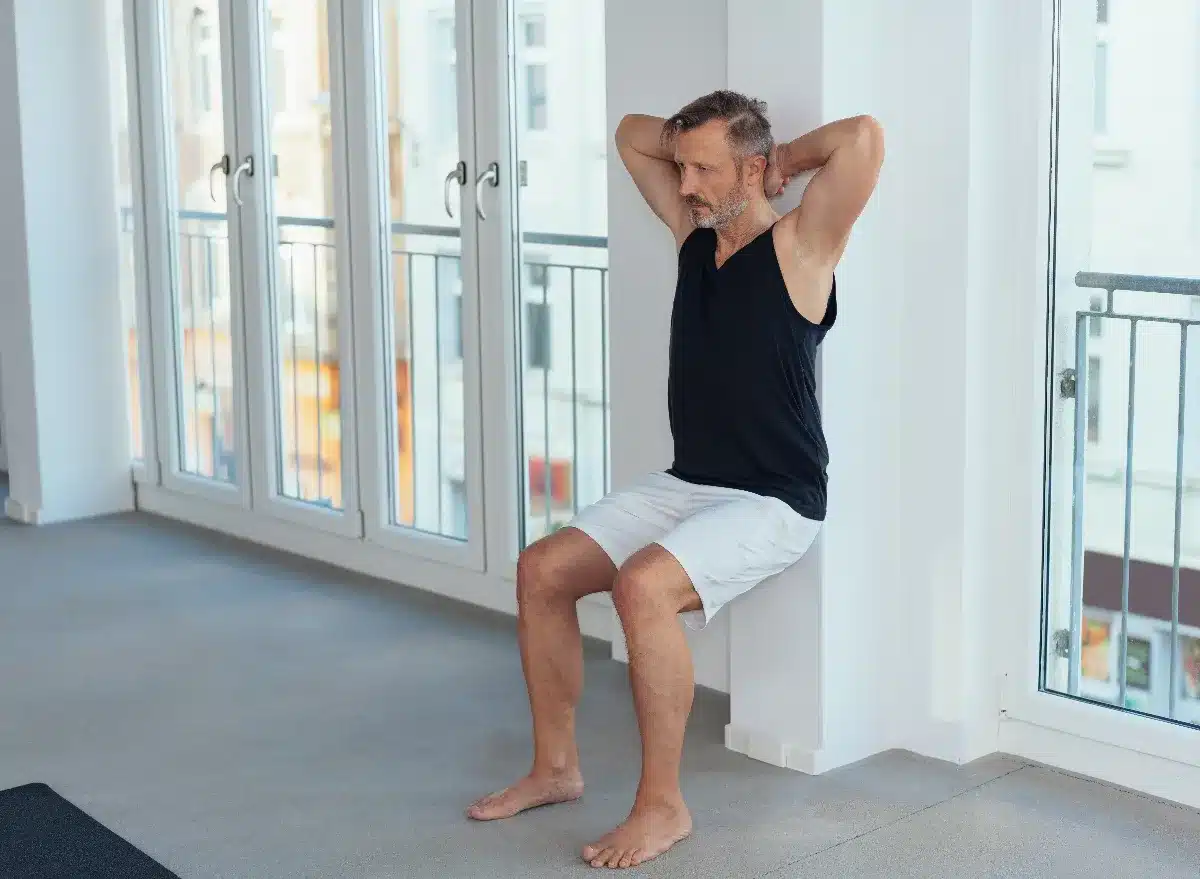
A good wall sit should feel strong from the start. Set your feet before you slide down, keep your back against the wall, and choose a depth you can hold without your knees feeling cranky. The goal is to make the position repeatable so your time means something.
How to Do It:
- Stand with your back against a wall and your feet about two feet in front of you.
- Slide down the wall until your knees bend to a comfortable depth.
- Keep your feet flat on the floor.
- Line up your knees over your ankles.
- Press your back gently into the wall.
- Hold the position while breathing steadily.
- Stop the timer when your form changes.
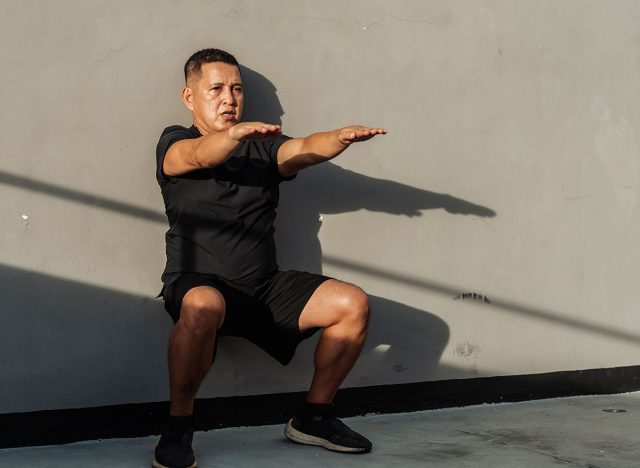
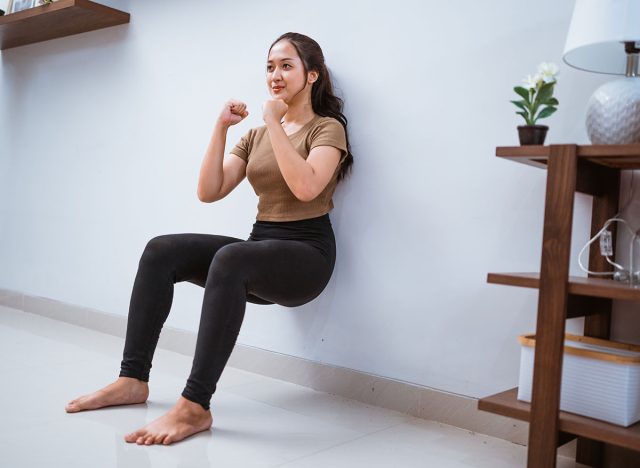
Movement Standard: Your wall sit counts when your back stays against the wall, your feet stay flat, and your knees stay aligned over your ankles. A full wall sit uses thighs near parallel, but you can start higher if that helps you hold better form.
Best Variations: High Wall Sit, Standard Wall Sit, Weighted Wall Sit, Banded Wall Sit.
Wall Sit Test After 50: What Your Hold Time Means
Shutterstock
Use the same setup every time you test. If you change the depth, foot position, or wall, your score becomes harder to compare. A clean hold at a consistent depth gives you the best read on your progress.
- Under 30 seconds: Building Your Base
This is a solid starting point. Focus on finding a position that feels stable and repeatable. Short holds can build plenty of strength with consistent practice.
- 30 to 60 seconds: Strong Foundation
Your legs can hold tension with good control here. This range shows you have a solid strength base and can start pushing toward longer holds.
- 60 to 90 seconds: Stronger Than Many
This is a strong score after 50. Your legs have enough endurance to stay active once the hold gets uncomfortable, and your position can stay steady as the effort builds.
- 90+ seconds: Stronger Than Most 30-Year-Olds
Holding a clean wall sit for 90 seconds or longer is an impressive benchmark. It shows your legs can create force, hold position, and stay composed under fatigue. That’s the type of lower-body strength that stands out at any age.
How to Build a Longer Wall Sit After 50
Shutterstock
Improving your wall sit doesn’t require grinding through brutal max holds every workout. You’ll make better progress by practicing clean sets, using the right depth, and gradually adding time. Think of the wall sit as a skill and a strength exercise. The better your setup, the longer your legs can usually hold.
- Start at the right height: Choose a depth that lets you keep your feet flat and your knees comfortable.
- Use short sets first: Try holds of 20 to 30 seconds before chasing longer times.
- Add time slowly: Increase your hold by five to 10 seconds when your current time feels solid.
- Practice two to three times per week: Give your legs enough repetition to improve without turning every session into a test.
- Strengthen the same pattern: Squats, step-ups, and chair stands can help your wall sit feel stronger.
- Use your breath: Keep breathing steadily so your whole body doesn’t tense up too early.
- Retest every few weeks: Match your setup each time so your score reflects real progress.
A 90-second wall sit after 50 is a serious lower-body benchmark. It’s challenging, but it’s also something you can build toward with smart practice. Start where you are, hold the position well, and let your legs show how strong they still are.
References
- Steves, Claire J et al. “Kicking Back Cognitive Ageing: Leg Power Predicts Cognitive Ageing after Ten Years in Older Female Twins.” Gerontology vol. 62,2 (2016): 138-49. doi:10.1159/000441029
- Ríos Riquelme, Mario et al. “Trends and Scientific Production on Isometric Training: A Bibliometric Analysis.” Sports (Basel, Switzerland) vol. 13,5 145. 12 May. 2025, doi:10.3390/sports13050145
- Lum, Danny, and Tiago M Barbosa. “Brief Review: Effects of Isometric Strength Training on Strength and Dynamic Performance.” International journal of sports medicine vol. 40,6 (2019): 363-375. doi:10.1055/a-0863-4539