


















Waking up with a rigid lower back is a common occurrence for many adults over the age of 55, yet it does not have to be an inevitable part of aging. Prolonged periods of rest, natural age-related muscle changes, and long-term sedentary habits often leave the musculature surrounding the spine less resilient than it once was. Strengthening the specific muscle groups that protect the spine through gentle, intentional movements can significantly improve how the back feels throughout the day.
A resilient lower back relies on a comprehensive support system. The abdominal muscles, glutes, hips, and hamstrings must work in harmony to stabilize the body during daily activities like standing, walking, or reaching. When these supporting muscles are strong, the lower back is relieved of excess pressure and strain. By focusing on the entire core and hip complex rather than just the spine itself, you can create a more stable foundation for movement.
The following five bed-based exercises are designed to activate these critical support muscles while remaining accessible for various fitness levels. These movements prioritize stability and control, helping to rebuild confidence in your physical capabilities. When performed consistently, these exercises can help facilitate smoother, more comfortable transitions from rest to activity, promoting better long-term spinal health.
Gentle Pelvic Tilts for Lumbar Mobility
Pelvic tilts are often the preferred starting point for addressing early-morning stiffness. This subtle movement encourages coordination between the deep abdominals and the lower back, helping to restore gentle mobility to the lumbar region. Instead of aggressive stretching, this exercise focuses on controlled muscle activation to wake up the spine’s support system. Many find that just a few slow repetitions can make the back feel significantly more supple before they even get out of bed.
How to perform:
- Lie on your back with knees bent and feet resting flat on the mattress.
- Engage your abdominal muscles to pull your navel toward your spine.
- Gently press the small of your back down into the bed.
- Slowly release the tension to return to a neutral position.
- Complete 12 to 15 controlled repetitions.
Bent-Knee Marches for Core Stability
Developing a strong core is essential for reducing the daily stress placed on the lower back. Bent-knee marches target the deep stabilizing muscles of the trunk, teaching the pelvis to remain steady while the legs move independently. This movement pattern is highly functional as it mimics the stabilization required for walking. Regular practice can lead to noticeable improvements in posture and overall balance, contributing to a more supported spine.
How to perform:
- Lie on your back with knees bent and feet flat.
- Tighten your core muscles to stabilize your midsection.
- Slowly lift one knee toward your chest, maintaining a steady pelvis.
- Lower the foot back down with control.
- Alternate legs for a total of 10 to 12 repetitions on each side.
Glute Bridges for Posterior Support
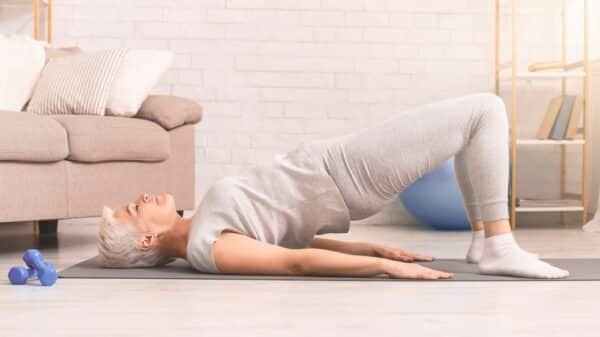
The role of the glutes in maintaining lower-back health is frequently overlooked. When hip strength is lacking, the lower back often compensates for the deficit during standing and walking, leading to fatigue and discomfort. Glute bridges strengthen the hips while requiring the abdominal muscles to maintain spinal alignment. Enhancing the strength of the posterior chain—specifically the glutes—is one of the most effective ways to promote a healthier, more comfortable lower back during daily tasks like climbing stairs.
How to perform:
- Lie on your back with knees bent and feet flat on the bed.
- Engage your core and squeeze your glutes.
- Lift your hips toward the ceiling until your body forms a straight line from shoulders to knees.
- Lower your hips back down slowly and with control.
- Perform 12 to 15 repetitions.
Heel Slides for Abdominal Coordination
Heel slides are an excellent way to strengthen the lower abdominal muscles while refining the coordination between the hips and the core. This exercise challenges the muscles that stabilize the spine without requiring high-impact movement or placing undue stress on the back. Maintaining a steady pelvis during each slide reinforces healthy movement habits that translate into better stability during everyday activities. While the movement appears simple, the controlled engagement of the core provides a powerful benefit for spinal support.
How to perform:
- Lie on your back with knees bent and core engaged.
- Slowly slide one heel away from you until the leg is straight.
- Use your abdominal muscles to pull the heel back to the starting position with control.
- Alternate legs, focusing on keeping your lower back still.
- Perform 10 repetitions for each leg.
The Dead Bug for Comprehensive Core Integration
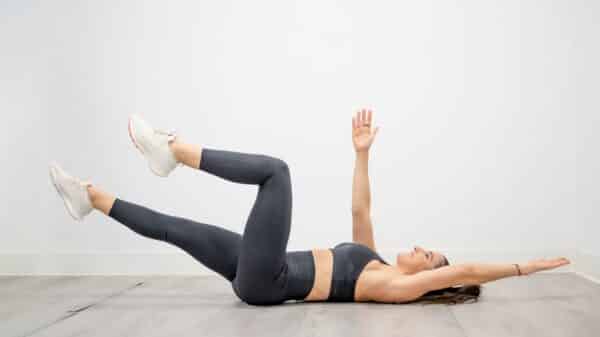
The dead bug exercise is highly effective because it activates nearly every muscle responsible for protecting the lumbar spine. It teaches the core to stabilize the trunk while the arms and legs move in opposing directions, reflecting the physical demands of daily life. Unlike traditional abdominal exercises that involve repetitive bending, the dead bug builds strength while keeping the spine in a safe, neutral position. Consistent practice often results in improved stability during lifting and walking.
How to perform:
- Lie on your back with your arms extended toward the ceiling.
- Lift your legs so your knees are bent at a 90-degree angle (tabletop position).
- Slowly lower one arm behind your head while simultaneously extending the opposite leg.
- Return both limbs to the center with control.
- Alternate sides for 10 repetitions each.
Summary of Benefits for Back Health
Addressing lower back stiffness after 55 requires a proactive approach to strengthening the muscles that support the spine. By incorporating these five bed-based exercises—Pelvic Tilts, Bent-Knee Marches, Glute Bridges, Heel Slides, and the Dead Bug—you can effectively activate your core, glutes, and hips before your day begins. These movements foster the stability and coordination necessary for smoother daily transitions and improved physical confidence. Consistency is vital; making these gentle exercises a regular morning habit can lead to a stronger foundation and a more resilient back over time.