















Incorporating specific standing movements into a weekly fitness routine can lead to visible physical improvements in as little as one month. For women over the age of 60, finding a workout that effectively targets the midsection is often a priority, yet many traditional methods fall short of expectations. While floor-based exercises like Pilates are popular, fitness professionals suggest that standing routines may offer a more efficient path to core strength and abdominal toning.
According to Jacob Siwicki, a certified fitness expert and founder of Siwicki Fitness, standing exercises are particularly beneficial because they replicate functional, real-world movements. Activities such as reaching, lifting, and bending are essential for maintaining independence during the later stages of life. By training the body in an upright position, you prepare it for the demands of daily living while simultaneously addressing aesthetic goals.
The development of a “belly pooch” in later life is often the result of several biological shifts. Following menopause, a decrease in estrogen levels frequently leads to a redistribution of body fat toward the midsection. Additionally, the natural decline in muscle mass as we age can slow the resting metabolism. Postural changes also play a significant role; as the upper back rounds forward, the pelvis can tilt in a way that pushes the lower abdomen outward, making it appear more prominent than it actually is.
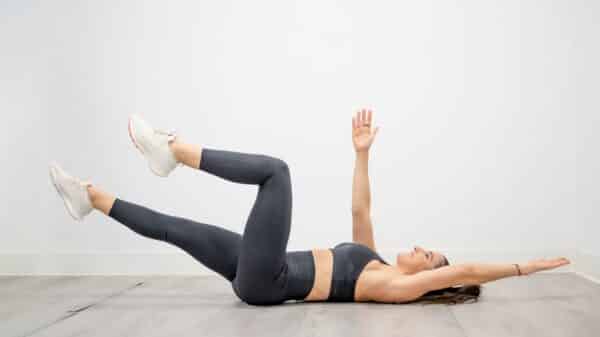
While Pilates offers excellent benefits for breathwork and deep core stabilization, its floor-based nature may not provide the metabolic stimulus needed by those looking to rebuild muscle. Standing core work adds a load-bearing component that forces the body to maintain its shape against gravity. This “real-world brace” helps retrain the core to stay firm throughout the day. Those who transition from mat-only routines to standing core exercises three times a week often report noticeable firmness within four to six weeks.
The Dynamic Standing March
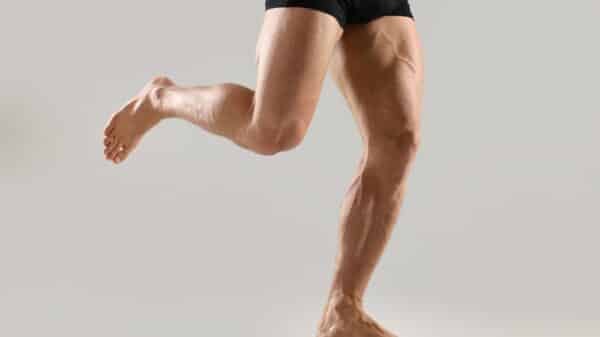
While this movement may appear simple, it is highly effective at activating the lower abdominal muscles and building foundational core stability.
- Stand with a tall posture, feet positioned hip-width apart and arms relaxed at your sides.
- Drive your left knee upward until it reaches hip height. Simultaneously swing your right arm forward and your left arm back, as if walking in place.
- Focus on keeping your midsection tight and engaged throughout the movement.
- Lower your foot with control and repeat the motion with the right knee and left arm.
- Maintain steady breathing and an upright chest.
- Continue this rhythmic bracing for 30 to 45 seconds per set.
Standing Oblique Crossover
This exercise targets the obliques and the lower abdominal wall simultaneously, helping to sculpt the sides of the waist.
- Begin in a wide stance with feet shoulder-width apart. Place your hands behind your head with elbows pointing outward.
- Engage your core and lift your left knee toward your left elbow. Perform a side crunch by bringing your torso toward the hip while keeping your chest open.
- Lower your leg slowly to maintain control.
- Switch sides, lifting the right knee toward the right elbow.
- Complete 15 controlled repetitions on each side.
Rotational Standing Windmill
The windmill is a multi-functional move that challenges the core through rotation while improving shoulder stability and overall posture.
- Hold a light dumbbell in your right hand and press it directly overhead, locking out your elbow.
- Shift your right hip slightly to the side. Keeping your eyes on the weight above you, hinge at the hips and lean your torso to the left.
- Reach your left hand down toward the floor, keeping it close to your leg.
- Go as low as your flexibility allows, pause briefly, and then use your core to return to a standing position while keeping the weight stabilized overhead.
- Perform 8 repetitions before switching the weight to the other hand.
Single-Arm Suitcase Carry
The “suitcase carry” forces the body to resist leaning, which creates a powerful isometric brace that flattens the lower abdomen.
- Stand tall while holding a single dumbbell in one hand at your side, similar to carrying a suitcase.
- Walk forward in a straight line for 30 seconds.
- The key is to keep your shoulders level; do not let the weight pull your loaded shoulder downward.
- Switch the weight to the opposite hand and repeat the walk.
Standing Knee Drive Balance Hold
Static holds are excellent for firing up the deep stabilizer muscles of the core that are responsible for balance and posture.
- Start in a tall standing position with feet hip-width apart and hands placed behind your head.
- Tighten your core and lift one knee until it is level with your hip.
- Hold this balanced position for 15 to 20 seconds, focusing on staying as still as possible.
- Lower the leg and repeat the hold on the other side.
Summary for Long-Term Success
Transitioning from traditional floor-based ab exercises to standing movements offers a functional approach to fitness for women over 60. By addressing the metabolic and postural changes that occur with age, these five exercises provide a comprehensive way to strengthen the core, improve balance, and firm the midsection. Consistency is the most important factor; by integrating these moves into a regular routine three times a week, most individuals can expect to see and feel a difference in their core strength and physical silhouette within a month to six weeks.