


















The squat hold is an exercise that may seem straightforward until you actually settle into the position and start the timer. Almost immediately, your lower body begins to generate significant tension, your hips must remain open and stable, and your core has to work overtime to prevent your torso from collapsing forward. For those over the age of 50, mastering this static hold is a major indicator of physical health. It reveals the capacity of your lower body to maintain structural integrity and steady endurance as fatigue sets in.
From a fitness perspective, the squat hold offers insights that traditional repetitions often miss. While a standard squat demonstrates strength through a range of motion, a squat hold tests whether your muscles can remain fully engaged in a fixed, powerful position. This capability is vital for everyday life, where we are constantly bracing, stepping, and adjusting our weight without always having the luxury of a full reset between movements.
This exercise provides a unique combination of strength, flexibility, and muscular stamina. Your quadriceps and glutes bear the primary load, while your ankles and hips facilitate the necessary depth, and your core keeps your spine aligned. Because it is an isometric movement, the muscles remain under constant tension for the duration of the hold. This consistent demand stimulates a deeper level of lower-body resilience, particularly when proper alignment is maintained throughout the effort.
Testing your squat hold is a practical way to assess the current state of your leg strength. You will discover exactly how long you can hold a technically sound position before your posture or depth begins to waver. Below, we explore the mechanics of the squat hold, the proper way to execute it, and what your specific time says about your fitness level after 50.
The Functional Benefits of Isometric Squat Training for Adults Over 50
Squat holds are exceptional for preserving the strength required for essential daily activities. Basic tasks such as sitting down, standing up, lifting objects from the ground, or navigating stairs all rely on the same muscle patterns used in a squat. By holding the bottom portion of the movement, you force your muscles to adapt to the range of motion that is most critical for functional independence.
The isometric nature of this exercise is what makes it so effective. In a static hold, your muscles stay active while your joints remain stationary, meaning your glutes, quads, and core must work without the assistance of momentum. This increased time under tension encourages muscular adaptation and builds a type of “staying power” that rapid repetitions cannot always replicate.
Furthermore, regular squat holds can significantly improve joint mobility. Spending time in a deep squat allows the hips, knees, and ankles to become accustomed to the range of motion. Instead of rushing through the movement, you are teaching your nervous system to feel stable and confident in a deep position. Over time, this leads to a smoother squatting pattern and greater overall stability in the lower body.
A Step-by-Step Guide to Mastering the Squat Hold with Proper Form
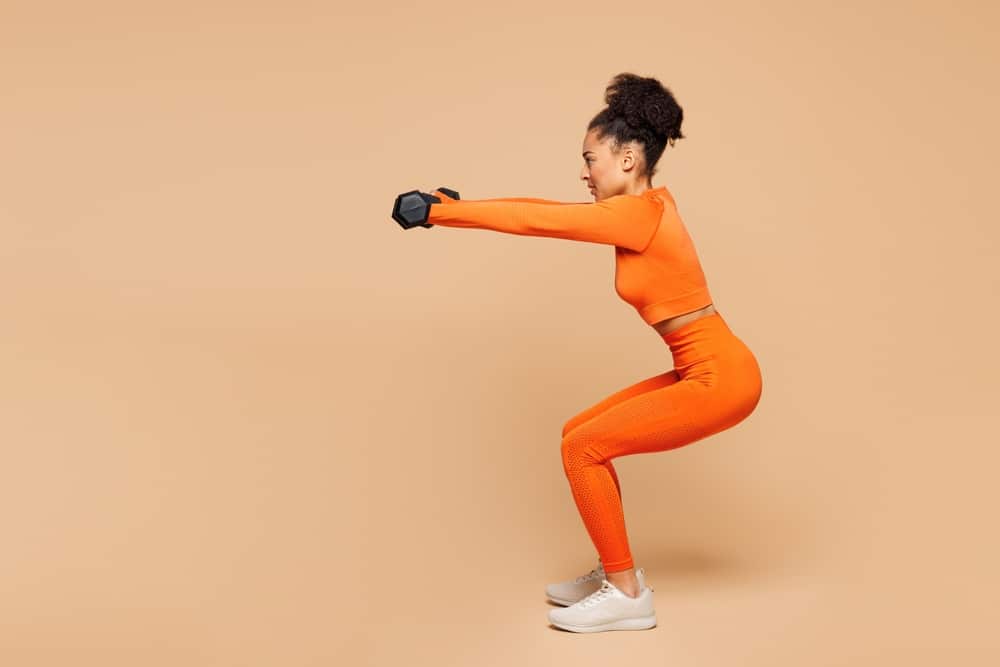
A successful squat hold is built on a foundation of correct alignment. You need your feet firmly planted, a tall spine, and knees that track in line with your toes. The objective is to find a challenging depth that you can fully control without compromising your posture. When performed correctly, the hold should look organized and stable from the first second to the last.
How to Execute the Move:
- Position your feet roughly shoulder-width apart, with your toes pointed slightly outward.
- Engage your core by bracing your midsection before you begin to descend.
- Lower your hips back and down as if sitting into a chair, allowing your knees to bend naturally.
- Continue lowering until your thighs are at least parallel to the floor, or as deep as you can go while maintaining control.
- Keep your chest lifted and ensure your weight is distributed evenly across your midfoot and heels.
- Maintain this position, focusing on steady breathing and consistent depth.
To meet the standard for this test, aim for a depth where your thighs are parallel to the ground. If you are still building the necessary strength, you can start with a slightly higher position or use a wall or a sturdy box for additional support as your mobility improves.
Top Variations: Wall Sits, Goblet Squat Holds (using a light weight), Box Squat Holds, Heels-Elevated Squat Holds, or TRX-Assisted Squat Holds.
Evaluating Your Lower Body Power: What Your Squat Hold Results Reveal
When timing your hold, consistency is key. The clock only counts as long as your depth, posture, and balance remain unchanged. Once your hips begin to rise, your chest sags, or your weight shifts to your toes, the test is over. Record the time you were able to maintain with flawless technique.
- Under 20 seconds: You are currently establishing your foundation. Focus on finding a stable position and becoming comfortable with the sensation of muscular tension.
- 20 to 45 seconds: This represents a solid base of fitness. Your legs have enough strength to handle daily tasks, and you are developing the endurance needed for more advanced activity.
- 45 to 75 seconds: You are in a strong category. Your quads, glutes, and core are well-coordinated, and you possess the stability required for a high level of physical function.
- 75 seconds or more: This indicates elite strength for individuals over 50. Achieving this time demonstrates exceptional lower-body power and muscular endurance that exceeds the vast majority of your peers.
Effective Strategies to Enhance Your Leg Strength and Endurance
Improving your performance in the squat hold requires building strength that can be sustained over time. The goal is to reach a point where you can remain stable and breathe calmly under pressure. Isometric training is the most direct path to this goal, as it teaches the muscles to tolerate tension and builds confidence in the joints. By combining static holds with traditional strength and mobility work, you can see rapid improvements.
- Consistency is key: Integrate squat holds into your routine two or three times a week, performing two to three sets each session.
- Prioritize quality over quantity: It is better to perform a perfect 20-second hold than a shaky 40-second hold. Shorter sets with impeccable form build the best foundation.
- Progress with weight: Once bodyweight holds feel manageable, hold a light dumbbell or kettlebell in the goblet position to increase the demand on your core and legs.
- Incorporate full-range squats: Dynamic squats build the raw strength necessary to control the static hold.
- Focus on the glutes: Exercises like glute bridges, step-ups, and hip thrusts improve the stability of your hips and support better squatting mechanics.
- Enhance your mobility: Dedicate time to stretching your calves and hip flexors. Better ankle and hip mobility allow you to reach a deeper, more stable squat position.
- Utilize assistance: If you struggle with balance, hold onto a door frame or a suspension trainer to practice maintaining depth without falling.
- Monitor your progress: Retest your maximum hold every few weeks using the exact same setup to track your improvement.
The squat hold is an efficient and telling measure of leg strength, mobility, and cardiovascular endurance. For those over 50, being able to surpass the 75-second mark is a clear sign of elite lower-body health. This type of functional power ensures that you can continue to navigate the world with ease, whether you are climbing stairs, enjoying long walks, or maintaining your independence for years to come.
References
- Hong, Sunghyun et al. “Cardiorespiratory and aerobic demands of squat exercise.” Scientific reports vol. 14,1 18383. 8 Aug. 2024, doi:10.1038/s41598-024-68187-z
- Wei, Wei et al. “Effects of progressive body-weight versus barbell back squat training on strength, hypertrophy and body fat among sedentary young women.” Scientific reports vol. 13,1 13505. 19 Aug. 2023, doi:10.1038/s41598-023-40319-x